Transform Nervous Energy Into Confident Tournament Play
Youth chess tournaments in Manhattan can feel intense for kids and parents. There are school league matches after class, weekend events at local schools, and bigger tournaments like those at Hunter, and other city sites. The boards are close together, clocks are ticking, and everyone looks serious. It is very easy for a child to feel nervous before the first move.
At United States Chess Academy, we see this every season in our regular classes and in the events we are currently preparing students for. The good news is that nervous energy is not a problem by itself. The problem comes when kids do not know what to do with it. Question-based training gives that energy a job. Instead of just "trying harder" or doing a random stack of puzzles, students follow simple questions before, during, and after games. These questions guide their thinking, calm their mind, and turn each tournament into real learning.
In this article, we will share how we use question-based training in our Manhattan classrooms and online lessons right now, as we get ready for upcoming school league matches and the next Hunter and local weekend tournaments on our calendar. You will see how a small set of clear questions can help your child feel more prepared, more focused, and more in control at the board, no matter which youth chess tournaments in Manhattan they are playing in.
Why Questions Supercharge Youth Chess Training
When we say "question-based training," we mean that coaches talk less and ask more. Instead of saying, "You missed this tactic," we might ask, "What was your opponent threatening here?" or "Which piece of yours is doing the least?" The student has to think, not just listen.
Here is why this matters for tournament play.
- In a real game, there are no hints, only your own questions
- Good questions slow kids down just enough to avoid blunders
- Repeating the same questions builds strong habits they can rely on
In youth chess tournaments in Manhattan, once the game starts, parents and coaches must stay silent. We cannot lean over and say, "Look for checks and captures!" or "Watch that back rank!" But if a child has practiced those questions in class, the voice they hear in their head belongs to their own training.
At our academy, this question-first approach shows up everywhere. In our current group lesson cycles, coaches ask the class, "What are all of Black's threats in this position?" before anyone moves a piece. In game review segments, students answer, "Where did my plan change?" instead of just watching a coach speak. In private and online lessons, homework is often a short list of positions paired with questions, not just "solve this." These same questions are highlighted in our newsletters so families know what thinking routines we are practicing each week.
Over time, kids start asking themselves the same questions during their own games, at Hunter events, in school leagues, and in weekend tournaments around Manhattan. That is where confidence comes from.
Building a Pre-Tournament Question Routine
Good tournaments often start the night before. We help students build a quick pre-game question routine, matched to their level. This is not a long checklist, just a minute or two of clear thinking before each round.
Some simple pre-game questions we encourage are:
- What openings am I most likely to see, and what is my main plan in each?
- What will I do if my opponent plays an opening I do not know?
- What is my time goal? For example, how will I avoid playing super fast in the first 10 minutes?
- What is one thing from my last lesson that I want to remember today?
For newer players, the routine might be as basic as: "I will take a breath before I move," or "I will always check if anything is hanging." For more advanced players, we might add questions about typical structures, endgames they want to reach, or specific tournament habits, like writing moves clearly.
Right now, we are practicing these routines in class in preparation for the upcoming school league rounds and the next Hunter weekend tournament. Families can support this at home before a big event. The night before a school tournament or a weekend Swiss, help your child say their questions out loud and maybe write them on a small card. If your child attends our camps, such as our Central Park camp and seasonal programs we feature in our newsletters, they will recognize many of these questions from class drills and practice games.
The goal is to arrive at the playing hall already knowing, "This is how I plan to think today," instead of, "I hope I remember everything."
In-Game Questions That Keep Young Players Calm
Once the clock starts, kids can feel their heart beating faster. Maybe their opponent plays faster than they expected. Maybe they are at a new tournament site in Manhattan and the room feels huge. In those moments, a short list of in-game questions can be like an anchor.
We teach students to pause and quietly run through questions like:
- What is my opponent threatening right now?
- Are any of my pieces or pawns undefended?
- What checks, captures, and threats do I have?
- After my move, what will my opponent probably play?
You can think of this as a mini "safety check." It gives your child something concrete to do with their thoughts, instead of just worrying about the clock, the rating, or the result.
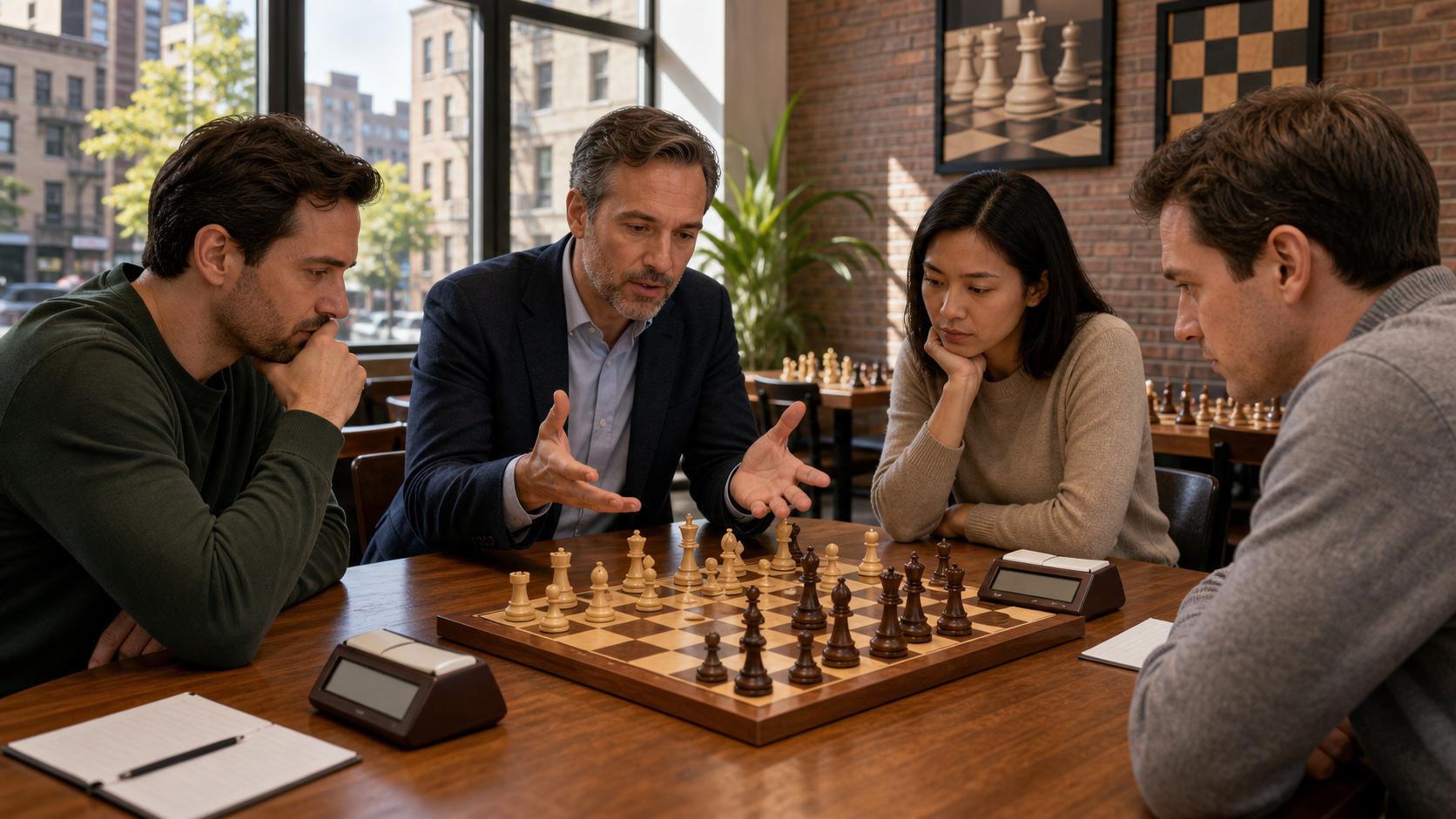
In our Manhattan classrooms and in online training games, we often simulate real tournament conditions. We use clocks, we have students write their moves, and we sometimes stop a practice game and ask, "If this were the next Hunter tournament we are preparing for, what questions would you ask here?" By the time they sit down at an actual event, these questions already feel familiar and safe.
Kids do not need to remember a giant list. Even one or two strong questions, used again and again, can cut out many simple mistakes that cause tears after the game.
Post-Game Questions That Turn Losses Into Progress
What happens after the handshake might be the most important part of the day. Many young players want to forget a loss right away or say, "I just blundered" and move on. We try to slow this down and turn each game into a lesson using gentle but clear questions.
When we review games from local school leagues, Manhattan events, or bigger city tournaments, we often start with:
- Where was the first moment you felt unsure or nervous?
- Did you follow your pre-game plan, or did you forget something early?
- Was there a tactic or pattern that we have studied in class that appeared here?
- If you could replay only one move in this game, which move would you change, and why?
These questions help kids see that a game is more than "win or lose." It is a story with turning points, choices, and ideas they can recognize in future rounds. Students are encouraged to bring their scoresheets from the weekend tournaments and league matches we list in our program calendar so we can walk through them together in class or in lessons.
Because our training is built on questions, game review feels like a conversation, not a lecture. We are not just pointing out mistakes. We are helping the student build their own inner coach, one clear question at a time. Over weeks of regular classes, camps, and lessons, these reviews start to shape personal goals for the next series of youth chess tournaments in Manhattan that we are currently highlighting for families.
Turning Today's Questions Into Tomorrow's Tournament Wins
The full question-based training system can grow and become very detailed, but families do not have to start big. A simple first step is to choose:
- One pre-game question
- One in-game question
- One post-game question
For example, a younger player might use:
- Before the game: "How will I stop myself from playing too fast in the opening?"
- During the game: "What is my opponent threatening?"
- After the game: "Where was the first move I did not understand?"
An older or higher-rated player might pick questions about specific openings, time use, or endgame plans. In our regular programs, coaches often help students fine-tune these question sets based on rating, style, and the specific upcoming tournaments and team matches on our schedule.
Over time, this turns into a personal training plan. At home, a family might keep a small "question card" in the chess bag, next to the scoresheets and pencils. After each event, the child can note one new question they want to add for next time. As the calendar fills with school matches, Hunter tournaments, and other youth chess tournaments in Manhattan that we are currently preparing for and mentioning in our newsletters, those questions will quietly guide their growth.
When kids know which questions to ask, they feel less lost and more steady, even in a noisy tournament hall. Instead of trying to remember every lesson they ever learned, they follow a few familiar questions they have practiced again and again in our ongoing classes and programs. That steady, repeatable way of thinking is what slowly turns nervous players into confident competitors.
Help Your Young Player Grow Through Tournament Experience
If your child is ready to test their skills in a supportive, structured setting, explore our youth chess tournaments in Manhattan. At United States Chess Academy, we design every event to build confidence, sportsmanship, and real over-the-board experience. Have questions about which section is right for your child or how to get started? Feel free to contact us so we can help you choose the best next step.
Frequently Asked Questions
What is question-based chess training for kids?
Question-based chess training teaches children to use simple prompts before, during, and after a game. Instead of relying on a coach to point out moves, players practice asking themselves questions about threats, loose pieces, plans, and time management.
How can my child feel less nervous before a Manhattan youth chess tournament?
A short pre-tournament routine can help turn nervous energy into focus. Your child can take a breath, review one lesson goal, set a time-management intention, and remind themselves to check for hanging pieces before moving.
What questions should kids ask themselves during a chess game?
Useful questions include, "What is my opponent threatening?", "Do I have any checks, captures, or threats?", and "Is any piece hanging?" Players can also ask which of their pieces is least active and what their opponent may do next.
What is the difference between solving chess puzzles and question-based chess training?
Chess puzzles usually ask a player to find the best move in a specific position. Question-based training builds a repeatable thinking routine, helping children identify threats, evaluate choices, and avoid blunders during real tournament games without hints.
How should a child prepare for school league and weekend chess tournaments in Manhattan?
Children should review familiar opening plans, practice a few core thinking questions, and set a realistic goal for using their clock carefully. After each game, they can review key moments by asking where their plan changed, what they missed, and what they want to improve in the next round.