See More Before the Clock Starts
Tournament success often begins before the first move. When a player can take in the whole board, spot a threat, and notice an opening, they are less likely to rush into trouble. We call this board vision: the ability to see every piece, vulnerable square, and both players’ plans before committing to a move.
In our chess classes, we help students look beyond their own ideas. Instead of asking only, “What move do I want to play?” we encourage stronger questions: What changed after my opponent’s move? Which pieces are unprotected? What checks, captures, and threats should I examine first? Those habits help children learning tournament basics and adults sharpening competitive play. These are the same piece-activity and king-safety themes highlighted in this month’s newsletter, giving families a way to connect weekly lessons, homework games, and instructor feedback with preparation for upcoming rated and scholastic play.
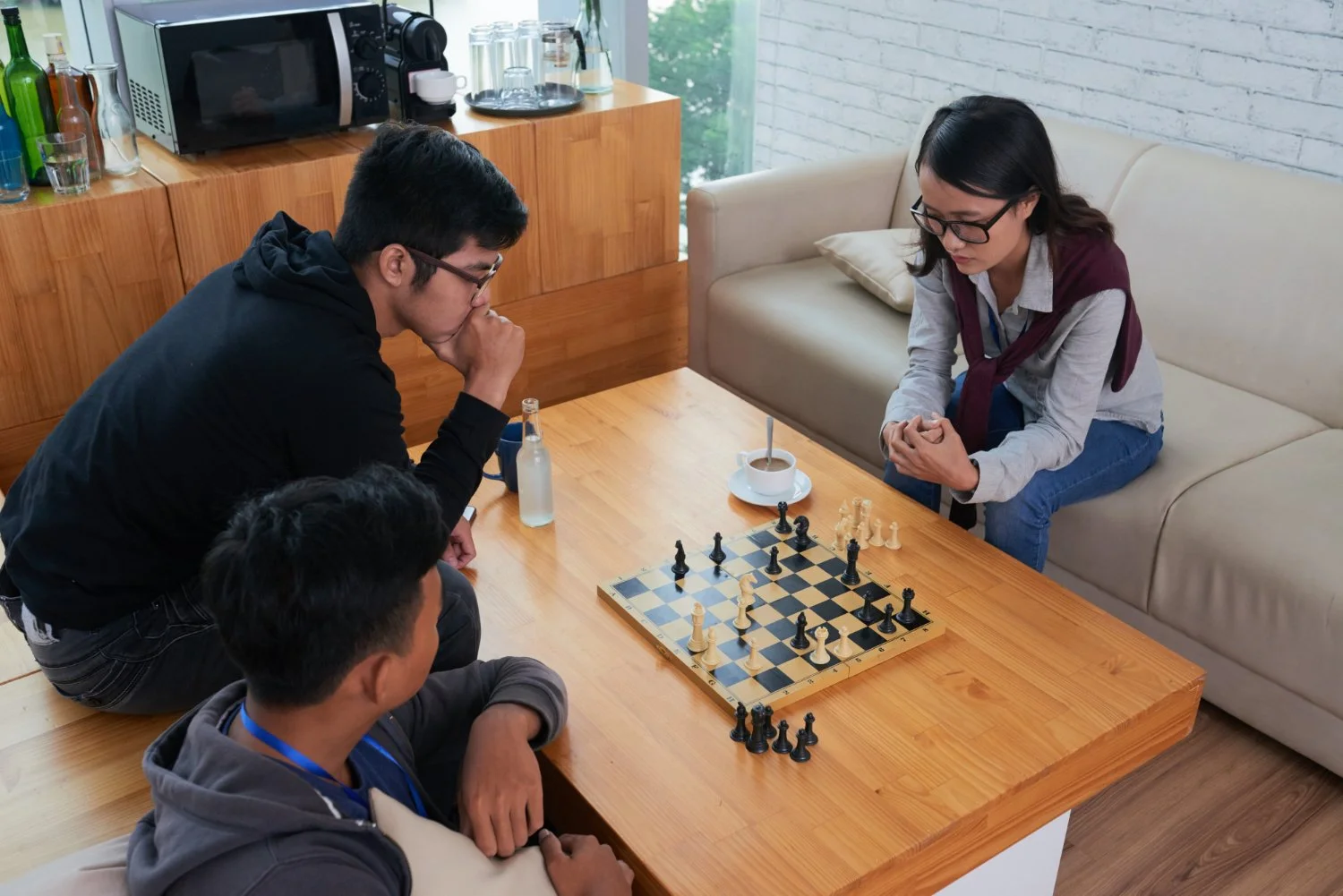
Students in our in-person chess lessons practice these skills in a setting where they can discuss positions, ask questions, and learn from the thinking process behind a move. Board vision is not about seeing every answer instantly. It is about having a dependable way to slow down and notice what matters.
Chess Classes Turn Patterns Into Fast Decisions
A tournament position can feel brand new, but many of its ideas are familiar. Forks, pins, discovered attacks, back-rank threats, and common checkmating patterns appear again and again. The more often students see these patterns in class, the faster they can recognize them when the clock is running.
Our instructors use puzzles, demonstration boards, and carefully chosen positions to guide that recognition. Rather than jumping straight to the answer, we encourage students to scan the board and explain what they see. That makes the lesson stick longer than simply memorizing a solution.
A reliable scanning sequence may include:
Checks that force an immediate response
Captures that change the material balance
Threats against the king, queen, or loose pieces
Attacked and defended pieces on both sides
The opponent’s strongest reply
Class themes also give families a clear way to connect the week’s learning with tournament goals. If students are studying piece activity, they can ask which pieces are blocked or inactive before moving. If the focus is king safety, they can look for open files, weak squares, and possible checks near both kings. These ideas help students see the full board instead of staring at one attractive move.
Progress does not always show up as an instant win. We often see meaningful growth when a student misses fewer threats, finds more candidate moves, or explains a decision with greater clarity after a game.
Build Board Vision Through Guided Practice
Playing games matters, but playing alone does not always show a student what they missed. Board vision grows through deliberate practice and feedback. A player needs help identifying not only where material was lost, but also when the warning sign first appeared.
That is why game review is such a valuable part of chess classes. During a review, we can pause at the earlier moment when a piece became loose, a diagonal opened, or an opponent’s threat became possible. Students learn that a blunder is often not one sudden event. It may begin a move or two earlier, when the board was not fully scanned.
Useful classroom habits include:
Pausing after every opponent move
Naming attacked and defended pieces
Checking open files, ranks, and diagonals
Looking at the safety of both kings
Asking what the opponent wants next
These routines are especially helpful when a student already has a plan. A planned move may be good, but it still needs to survive a fresh look at the position. We want players to notice, “My idea works, but only if I first deal with that threat.”
For families balancing busy schedules, online chess lessons can also keep game review and instructor feedback connected to a student’s regular practice. Whether the lesson happens in Manhattan or online, the goal stays the same: make the scanning process familiar enough that it appears naturally in tournament play.
Prepare for Manhattan Tournament Conditions
Tournament rooms can feel different from a normal class. Players may face unfamiliar opponents, hear activity around the playing area, manage a new time control, or feel pressure after an unexpected move. Upcoming rated and scholastic events listed on the Academy calendar can give students valuable competitive experience, but those conditions can make rushed thinking more likely.
Opening knowledge helps, yet board vision is what allows a player to adapt. An opponent may choose a move that was not part of the expected line. Instead of panicking or trying to force memorized moves, students can return to the process they practice in class: pause, assess, look for forcing moves, and check for immediate threats.
Before tournament day, we recommend a simple, manageable routine:
Review class notes and one or two recent game lessons
Solve a reasonable set of puzzles without exhausting yourself
Play practice games at an appropriate time control
Get enough sleep and keep the day’s routine calm
Confirm event details, arrival time, and equipment needs
Families can also use the Academy calendar and class registration information to keep lessons and tournament planning organized during a busy fall schedule. The point is not to pack every spare moment with chess. A rested player with a clear routine is often better prepared to use what they already know.
After the event, results become useful feedback. A win may show that a student applied a class concept well. A loss may reveal one board-vision habit to work on next, such as checking loose pieces or reviewing every possible check before moving.
Carry Fall Progress Into Tournament Play
This month offers a natural checkpoint as students continue the piece-activity and king-safety work highlighted in the newsletter. Families may notice that a player talks about mistakes differently, pauses longer before moving, or recovers more calmly from a difficult position. Those changes are closely tied to stronger board vision.
Weekly chess classes create continuity between instruction and competition. Instead of telling a student to simply “play better,” we can help them carry one clear idea into the next rated or scholastic game. A student might focus on finding undefended pieces, checking all forcing moves, or asking what changed after the opponent’s last move.
Small goals keep chess challenging without making it stressful. When players recognize the patterns, questions, and routines they have already practiced, tournament positions feel less overwhelming. Better board vision comes one move at a time: slow down, scan the position, trust the process, and make the strongest decision you can see.
Build Confidence for Your Next Tournament
Our chess classes give players a supportive place to practice tournament-ready habits, from evaluating threats to managing time under pressure. United States Chess Academy helps students apply these skills as they prepare for events at Hunter, throughout Manhattan, and beyond. Whether your child is new to competition or ready for a bigger challenge, our coaches can help them develop a focused approach to every game.