Is My Child Ready for Competitive Chess
Reading the Board: What "Ready" Really Looks Like
Parents of young chess players usually reach the same crossroads at some point: is my child ready to play in a real tournament? Competitive chess is different from casual games at home or in a school club. There are clocks, written notation, pairings, formal rules, and a quiet playing hall where every move matters. It can look intense from the outside, especially if this is your first experience with organized chess.
At United States Chess Academy, based in New York City, we work with families who are right at this decision point. From what we have seen, readiness for competitive chess is not about being a prodigy or winning every game. It is a mix of basic chess skills, emotional maturity, and practical family support. A structured program like a chess kids academy can make the transition from friendly games to tournaments far smoother and more positive for both children and parents.
Core Chess Skills Your Child Should Have First
Before a child enters a tournament, they do not need to know advanced theory, but they do need a solid foundation. The first piece of that foundation is a clear understanding of the rules. Your child should know how every piece moves, how castling works, what check, checkmate, and stalemate are, and what it means to offer or accept a draw. It is also helpful if they are familiar with basic touch-move etiquette and have seen or tried a chess clock, even in a relaxed practice game.
On the board, we look for simple, consistent habits. Can your child set up the board correctly without help? Do they usually start the game with reasonable opening moves that develop pieces and control the center, instead of random pawn pushes? They do not need memorized openings, but they should have some logic to their play.
Tactical awareness is another important sign. Before playing tournaments, most children benefit from recognizing ideas such as:
Forks
Pins
Simple double attacks
Basic checkmates like the ladder mate or a back-rank mate
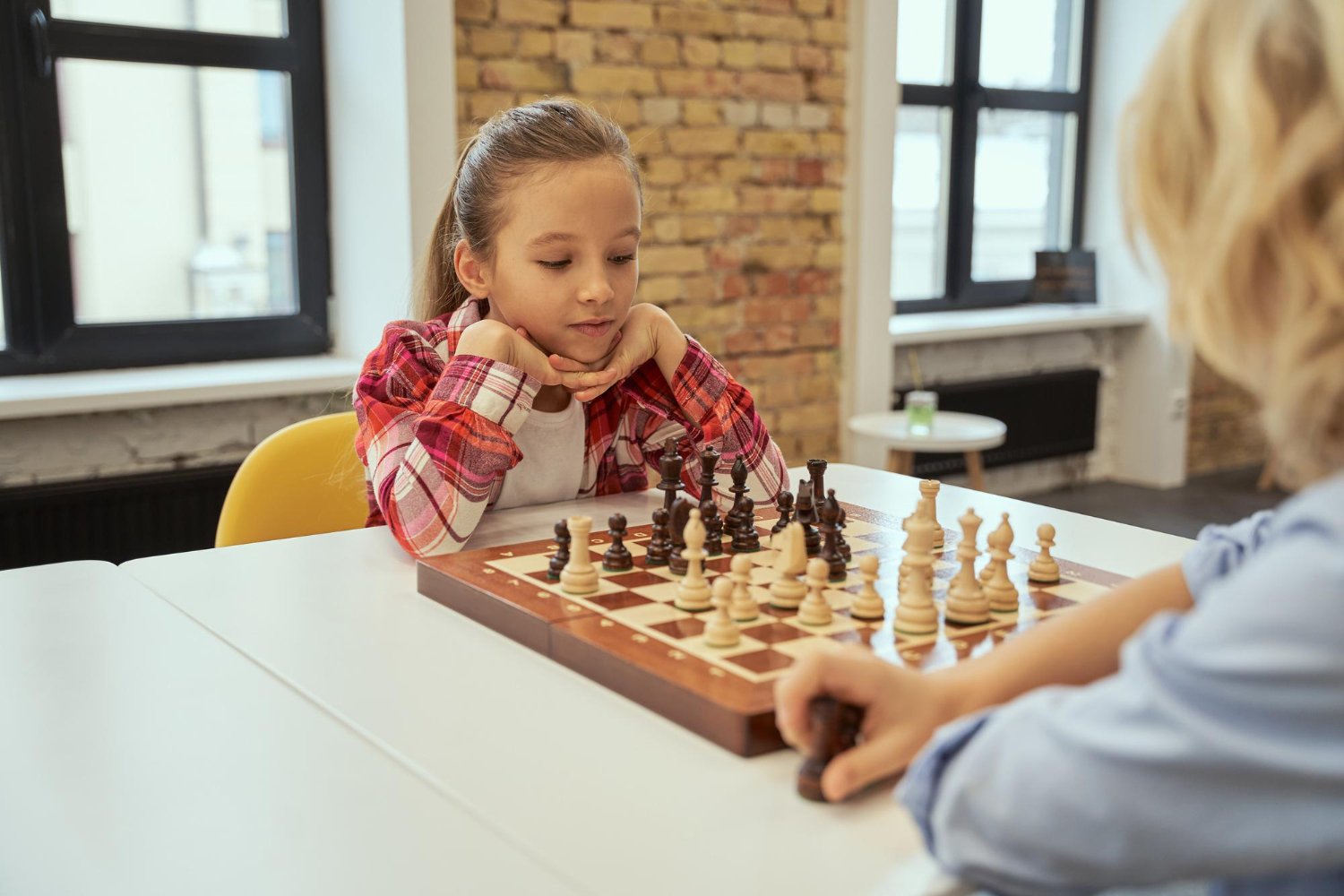
Alongside skills, attention span matters. A beginner scholastic game can last anywhere from 20 to 40 minutes or more. If your child can stay focused on one game for that amount of time, think for at least a few seconds on each move, and avoid playing instantly, that is a strong indicator they may be ready to try competitive play.
Emotional and Social Signs Your Child Is Tournament-Ready
Chess is not only a mental game; it is an emotional one. In a tournament, your child will win some games and lose others, sometimes in dramatic fashion. A key readiness sign is how they handle that swing. If they can lose a game without a major meltdown, even if there are a few tears, and are willing to ask what went wrong instead of blaming opponents, clocks, or luck, that is very encouraging.
Social behavior at the board is just as important. Tournament halls require quiet, patience, and respect for others. A child who can sit calmly, avoid leaving the board over and over for non-chess reasons, and follow basic directions from adults is usually ready to handle a scholastic event. They do not have to be perfectly still, but they should not disrupt nearby games.
We also pay attention to the source of motivation. Strong signs include:
Asking to play more chess or solve puzzles on their own
Wanting to join classes at a chess kids academy or school club
Showing excitement about playing stronger opponents, even if they might lose
Talking about new ideas they have learned, instead of only talking about trophies
When the interest is coming from your child, not from adult pressure, tournament chess is much more likely to be a healthy, long-term activity.
Practical and Family Readiness for Competition
Even if your child seems ready, tournaments will be more successful if your family is prepared for the practical side. A typical scholastic event can last several hours with multiple rounds, short breaks, and a lot of waiting between games. It helps if everyone understands this ahead of time, so snacks, rest, and realistic expectations are in place.
Parents also play a big role in the emotional climate. Focusing on growth, effort, and learning is far better than focusing only on ratings or trophies. Children pick up on adult stress quickly. When parents stay calm, support good manners, and avoid coaching or criticizing during or immediately after games, they create the conditions for steady progress.
Choosing the right event matters too. We usually recommend:
Starting with scholastic or beginner sections instead of open sections with adults
Asking an experienced coach which tournaments are suitable as a first step
Keeping the first event local and simple before committing to longer or higher-stakes events
This kind of gradual approach helps your child build confidence while they learn the rhythm of competitive play.
How a Structured Program Bridges the Gap
A well-run chess kids academy can make the move from casual play to tournaments far less intimidating. At United States Chess Academy, our titled and certified coaches work with children and adults at many different levels, and a big part of that work is honest evaluation. Coaches can tell you whether your child has the fundamentals needed and which areas would benefit from a bit more preparation before tournaments.
Professional instruction also helps create a roadmap. That might include learning to record moves with simple notation, practicing with clocks in longer games, and going over basic tournament rules. Group classes and school programs are especially powerful, because children play against peers in a structured but friendly setting that mimics a tournament without the pressure of ratings.
Within those groups, kids learn how to handle sitting across from someone new, shaking hands, pressing the clock correctly, and saying “good game” whether they win or lose. Many academies, including ours, also organize in-house practice events or online team matches. These low-risk steps give families a chance to see how a child reacts to competition while knowing that coaches are on hand to guide them.
Simple Tests to Help You Decide Together
If you are still unsure, there are a few simple tests you can try at home. One approach is to run a mini mock tournament game. Set up the board, use a basic clock setting, agree on quiet play, and limit your own involvement. See whether your child can stay focused, follow the rules, and enjoy the experience, regardless of the final result.
It also helps to ask direct questions and really listen to the answers. For example:
Would you like to try playing against kids from other schools?
How would you feel if you lost all your games but learned new ideas?
Do you want to learn how real tournaments work?
You do not need your child to promise to win. You are listening for curiosity, readiness to learn, and openness to challenge. For a clearer picture, many families choose to have a professional evaluation with a coach, then use that feedback to pick an appropriate first event and a training plan that feels sustainable.
Taking the First Confident Step Into Competitive Chess
When we talk with parents, we encourage them to see tournaments as learning adventures, not pass or fail tests. Every game, win or lose, gives your child information about their thinking, patience, and resilience. Starting small, such as a local scholastic event, a short format tournament, or an in-house academy competition, lets them explore this new world in a safe, supported way.
With the right mix of basic skills, emotional readiness, and realistic family expectations, competitive chess can become a rich part of your child’s growth. A structured environment like United States Chess Academy is here to help children build that foundation, understand what tournaments are really like, and approach their first competitive games with confidence and a healthy love for the game itself.
Help Your Child Build Confidence and Strategic Thinking Through Chess
If you are ready to give your child a fun, structured path to growth, our Chess Kids Academy is here to guide every move. At United States Chess Academy, we focus on clear instruction, personalized feedback, and real game experience so young players stay engaged and keep improving. Explore our lessons to find the right fit for your child, or contact us with any questions about getting started.