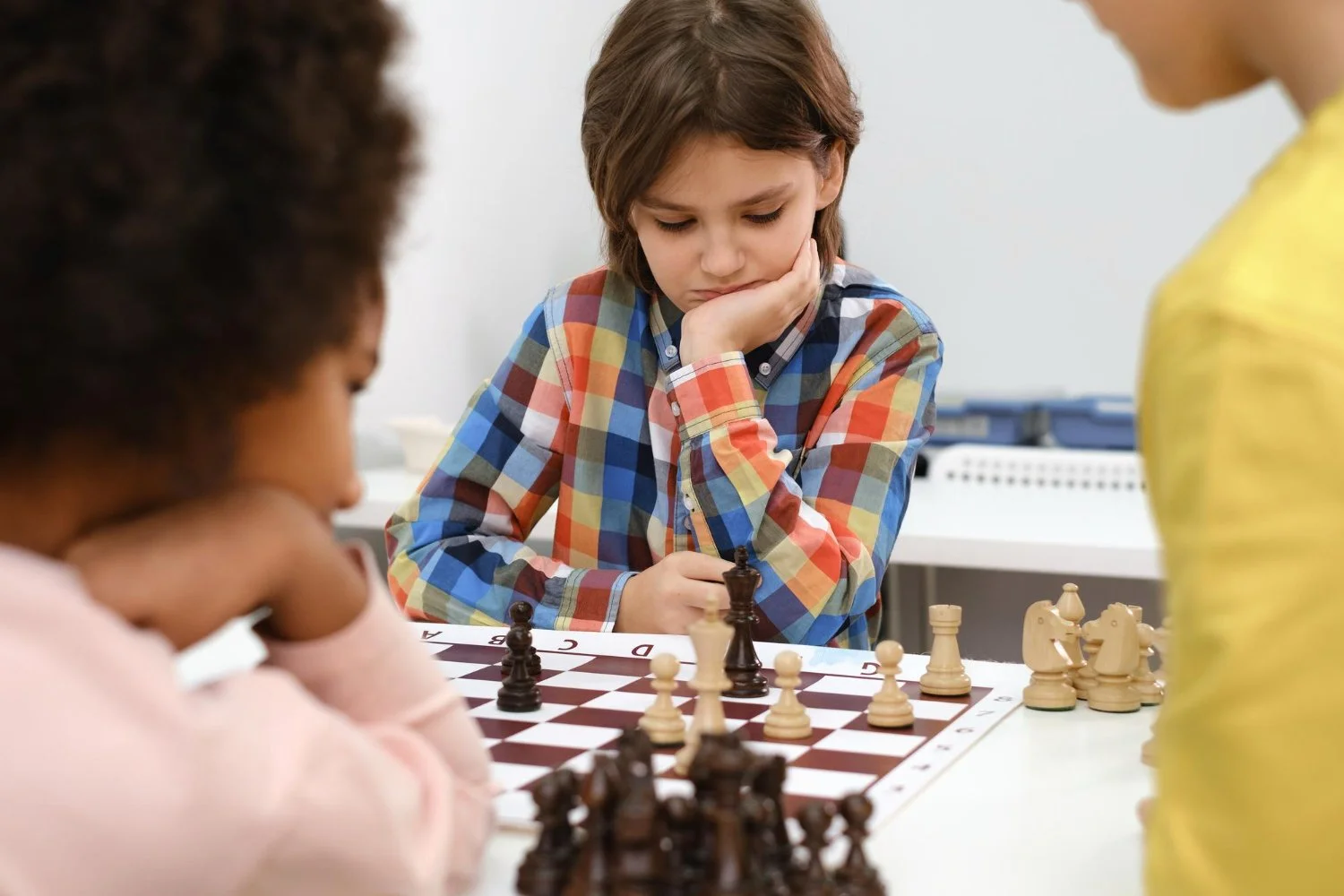
Thanksgiving break can be a great time for children to grow their chess skills while still enjoying family time. For Manhattan families balancing travel, guests, meals, and downtime, chess can fit the week in more than one way, from organized events to relaxed games around the kitchen table.
We see both settings matter. A class, camp session, tournament, or rated event gives players structure and challenge, while home games give them room to experiment, explain ideas, and simply enjoy the board with people they love.
Make Thanksgiving Break a Chess Growth Opportunity
Holiday chess does not have to mean choosing between competition and family connection. A child might attend one organized activity early in the break, then play a few unrated games with a parent, sibling, cousin, or grandparent later in the week. That mix keeps chess fun while giving students a chance to use what they have been learning.
Through our classes, tournament coaching, camps, and rated events, students can bring current opening principles, tactical patterns, and endgame priorities home. A player who has practiced opening principles in class may proudly explain why they developed a knight. Another may want to show a relative a tactic they spotted during a lesson. Those small moments help chess become part of family life rather than something that only happens in a classroom or tournament room.
Organized chess events in Manhattan and casual home play serve different purposes:
Events create structure, peer competition, and guided feedback.
Home games allow children to try ideas without worrying about a result.
Family play gives students a chance to teach what they know.
A balanced week can include both challenge and rest.
For students who want more regular instruction, our in-person chess lessons can connect classroom learning with the practical decisions children face over the board.
When Chess Events in Manhattan Add More Than Home Play
A scheduled event can give a school break helpful shape. Even one tournament, coaching session, or camp activity may give a young player a clear goal for the week. Instead of setting chess aside entirely, they can apply lessons in a setting that feels focused and exciting.
In supervised events, students practice habits that are hard to recreate fully at home. A parent can certainly play a thoughtful game, but tournament conditions introduce clocks, unfamiliar opponents, rules, and the need to stay composed after a mistake. These are skills that grow through real experience.
During chess events in Manhattan, children may practice:
Managing their time and using the clock wisely.
Showing sportsmanship before, during, and after a game.
Facing players with different styles and ideas.
Recording moves when notation is appropriate.
Making decisions independently under tournament conditions.
Peer competition also teaches an important lesson: every opponent creates a different problem. One player may attack quickly, while another plays carefully and waits for an opening. Our instructors can help students prepare by reviewing tactical patterns, opening basics, endgame priorities, and practical tournament habits.
Families can use the Academy newsletter and program calendar to connect current class themes with scheduled Thanksgiving-week options, rated events, tournament coaching, and camps. It can also be useful to review upcoming tournament listings from US Chess alongside Manhattan opportunities, including Hunter tournaments when they are scheduled. The best event is one that fits your child’s experience level, confidence, and holiday availability.
Build Better Habits at Home Through Relaxed Games
Home play has its own special value, especially during a holiday built around gathering together. A relaxed game after breakfast, before dessert, or during a quiet afternoon can make chess feel social and welcoming. For a child who has worked hard in class, it can be a chance to enjoy the game without the pressure of a clock or score sheet.
Short, consistent games are often more helpful than trying to fit in a long chess session. We recommend keeping the mood light. Use a clock only if it makes the game more exciting, and let younger or newer players make mistakes without feeling that every move must be perfect.
Parents do not need to be chess experts to create useful learning moments. After a game, try asking simple questions that encourage reflection:
What was your plan in that position?
Which move felt hardest to choose?
Did you notice a tactic or threat?
What would you try differently next time?
These questions mirror the thinking habits we encourage in lessons. They help children explain their choices, which is often more valuable than immediately being told the “right” move.
Thanksgiving also offers easy formats for mixed-age groups. A family mini round robin can give everyone a chance to play. A puzzle challenge can work well between relatives who do not have time for a full game. Parent-child consultation games are another good choice, since teammates can talk through moves together and let children share the ideas they have learned.
Choose a Holiday Mix That Fits Your Family
There is no single best Thanksgiving chess plan. Some students are eager for competition and want to test themselves in a rated event. Others need a quieter week of puzzles, family games, and rest. We encourage families to think about what their child needs most right now, rather than trying to fill every open hour.
A simple way to choose is to consider whether your child is asking for more competition, wants to meet other players, needs help using class lessons in real games, or would benefit from unstructured time. Travel plans, visiting relatives, and energy levels matter too. Chess should add something positive to the break, not make the schedule feel crowded.
A tournament-focused player might attend coaching, play in an appropriate event, and review key moments afterward. A balanced player may enjoy one Academy activity followed by two short home games. A beginner might spend the break reinforcing basic checkmates, opening principles, and board vision with family members.
Our newsletter updates can help families plan around current opening, tactics, and endgame themes being emphasized in class, as well as upcoming tournaments and scheduled programs. When students are studying a tactical theme, an endgame idea, or an opening habit, a few minutes of home practice can make that lesson stick. Families who are away from Manhattan can also keep a familiar routine through online chess lessons when that format fits their plans.
Use Tournament Coaching to Turn Games Into Learning
A tournament result tells only part of the story. The deeper learning comes afterward, when a student looks back at choices, notices patterns, and chooses one goal for the next game. Tournament coaching gives players a clear way to prepare and reflect, whether they are moving from home games into competition or working toward more advanced events.
Our instructors help students think through practical questions: How should I approach the opening? When should I slow down and check for tactics? What should I do after a mistake? How can I manage my time without rushing? Those habits can carry from tournament games into schoolwork, activities, and everyday problem-solving.
Coaching lessons can continue at home without turning the holiday into extra homework. A child might replay one interesting position, solve a few related puzzles, or explain a newly learned idea to a family member. Growth can also mean using time well, writing moves carefully, showing respect, or recovering calmly after a hard game.
Thanksgiving chess time works best when it leaves room for curiosity, patience, and connection. Whether your family chooses one event, one coaching session, or a handful of casual games, the goal is not only to win more often. It is to help your child enjoy thinking, learning, and sharing the game with others.
Find A Chess Experience That Fits Your Child
United States Chess Academy helps families choose programs that match each child’s interests and experience level. Browse upcoming chess events in Manhattan to find tournaments, classes, and opportunities to play. If you have questions about the right next step, contact us and our team will be glad to help.