Find Your Best Path to Faster Chess Improvement
Choosing between a virtual chess coach and an in-person trainer matters a lot if you want to improve quickly and stay consistent. As the school year starts to slow down and schedules finally open up, many players see a real chance to train more, raise their ratings, and get ready for a busy tournament season. The right kind of coaching can turn that free time into real progress, not just random blitz games online.
In this article, we will walk through how each coaching style works, who it fits best, and how to match it to your goals, schedule, and personality. At United States Chess Academy, we work with both kids and adults through online and in-person lessons with titled coaches and grandmasters, so we see every day how different formats help different players. Our goal is to help you make a clear, confident choice that fits your life and supports long-term growth, not just a short burst of motivation.
How a Virtual Chess Coach Fits Modern Busy Schedules
For many families and adult players, a virtual chess coach solves the biggest problem right away: time. There is no commute, no rushing out the door, no driving across town in traffic. That alone makes it much easier to fit regular lessons around:
School exams and big projects
Work deadlines and late meetings
Local weekend tournaments and online events
Summer camps, trips, and family plans
Online lessons are often easier to book early in the morning or later at night. That kind of flexibility is hard to match with a strict in-person schedule, especially if several kids in the family are taking classes or playing on school teams.
Another huge benefit is access. With a virtual chess coach, you are not limited to coaches who live near you. You can work with national masters, international masters, and grandmasters from many different places. This is especially helpful if you want a coach who:
Specializes in a certain opening you love
Focuses on endgames and technical positions
Helps with serious tournament prep and game analysis
Online coaching also uses strong digital tools. Screen sharing and live analysis boards help both coach and student look at the same position clearly. Game databases make it easy to pull up classic games or your own tournament games. Some coaches record sessions so students can rewatch them later to review tricky lines or important ideas. Platforms likeChess.com provide structured lessons and analysis tools that many coaches integrate into training.
A virtual chess coach tends to work best for:
Self-motivated students who can sit at a screen and stay engaged
Families with very tight weekly schedules
Players who travel often but want a steady training routine
Students who live far from strong local clubs or academies
If that sounds like you, online lessons, such as the ones in our online coaching programs, can be a very practical choice.
When an In-Person Chess Trainer Makes the Difference
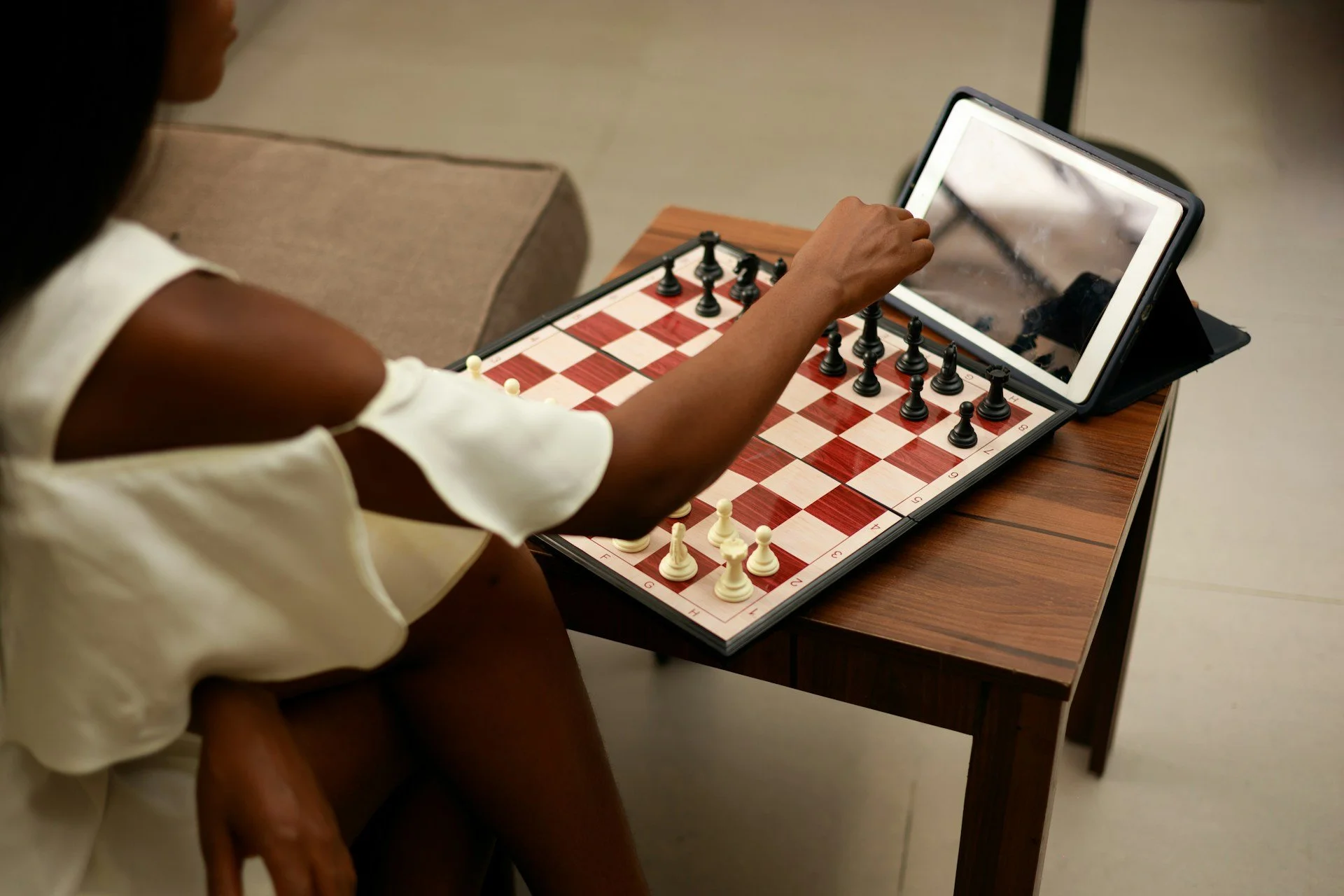
For some players, nothing feels quite like sitting across the board from a coach. The physical board, the clock ticking, and the presence of another person all create a different level of focus. An in-person trainer can watch your body language and habits and help you build real over-the-board skills like:
Managing time under pressure
Staying calm after blunders
Controlling nerves when facing higher-rated players
These are the same skills you need in real tournaments, whether that is a weekend open, a school league, or larger events. Organizations like the US Chess Federation set official rules and host rated events that many in-person programs prepare students for.
An in-person setting also gives structure. In a club, classroom, or academy, there are fewer temptations from home like phones, TV, or random browser tabs. This can be especially helpful for younger kids who struggle to sit in front of a screen for long. A coach can walk around the board, point to squares, and run hands-on exercises that keep students active.
Face-to-face training allows very quick and practical feedback. A trainer can correct small but important habits, such as:
Touching pieces before thinking
Forgetting to write moves clearly
Sitting too far from the board or slouching
Reaching for the clock at the wrong time
It is also easier to simulate tournament conditions: real clocks, real scoresheets, silence, and the feeling of being watched. That kind of practice helps a lot before busy summer schedules and then again when fall tournaments and school events pick back up.
In-person training usually fits best for:
Very young beginners who need clear structure and simple tasks
Students who lose focus quickly online
Players who learn best with physical boards, pieces, and face-to-face talks
Kids and adults who enjoy the social side of a club or academy
If that sounds closer to your style, you might benefit from our in-person lessons and classes with titled coaches.
Comparing Costs, Commitment, and Learning Results
When families compare a virtual chess coach with an in-person trainer, they often think first about price. While exact rates can change based on the coach and format, there are a few general points to keep in mind.
With in-person lessons, you have more hidden costs like transportation, gas, and parking. You also spend extra time getting to and from the academy, which can limit how often you can attend. With online lessons, you do not have those extras, which can make it easier to keep a steady weekly schedule.
Both formats can include:
Private one-on-one lessons
Small group classes
More intense training periods like seasonal camps
The bigger factor for real improvement is not which format is perfect, but which format you can stick with every week. A regular weekly lesson plus homework and practice games will almost always beat a rare, “perfect” session that is hard to schedule.
Learning results depend on three main things: the quality of the coach, the student’s effort, and practice habits between lessons. A high-quality online coach who reviews your tournament games, assigns clear homework, and checks your progress can help you reach big goals like:
Breaking a new rating milestone
Qualifying for a scholastic championship
Moving up boards on a school or club team
The same is true for a strong in-person trainer who plays training games with you, runs focused exercises, and builds your confidence over the board.
Many players find that a blended approach works best. For example, some students use online lessons for theory, opening prep, and game analysis, then attend in-person group classes or camps for training games and tournament-style practice. You can even mix formats inside one program by choosing different lesson types when building a plan in the lesson selection area.
How to Decide: Questions to Ask Before You Commit
Before you decide between a virtual chess coach and an in-person trainer, start with your goals. What do you want in the next few months or over the next year? Some clear examples:
Reach a certain rating by the end of summer
Prepare for a big scholastic or state event
Move from casual play to serious tournament play
Break into a new rating level like 1200, 1500, or 2000
Next, think about learning style and personality. Ask yourself:
Do I focus well on a screen, or do I get distracted easily?
Do I enjoy face-to-face coaching and social energy?
Am I comfortable with simple online tools like video calls and digital boards?
Do I respond better to gentle guidance or stricter structure?
Then, look carefully at your weekly schedule. Consider school, homework, work hours, and family routines. Add in tournament plans: weekend events, summer tournaments, local scholastic events, or big classics later in the year. Which format fits that calendar with the least stress and travel?
Finally, think about the coach themselves. Whether online or in person, you want:
Titled instructors or clearly experienced tournament players
A structured training plan, not random puzzles each week
Homework between lessons and regular progress checks
A communication style that motivates, not scares or bores you
Many families and adults find it helpful to try a lesson or two in each format to see what actually feels better in real life, not just in theory.
Build Your Ideal Training Plan This Season
Once you understand the pros and cons of a virtual chess coach and an in-person trainer, the next step is building a simple, realistic weekly plan. That plan might include:
One or two lessons a week in your chosen format
Daily or almost daily self-study, even if it is just 20 to 30 minutes
Regular online games or over-the-board practice, not just lessons
Extra review before important tournaments or busy event seasons
At United States Chess Academy, we work with kids and adults who prefer all-online, all-in-person, or a mix. Some players train online during busy school weeks, then join in-person group classes or seasonal camps when their schedule opens up. Others stick to one format year-round because it fits their rhythm and helps them stay consistent.
Whichever path you choose, the key is to match your training style to your life so that lessons are not a burden, but a stable part of your week. With the right balance of coaching, practice games, and self-study, you can turn your extra time this season into steady, lasting improvement on the board.
Level Up Your Chess Skills With Personalized Online Coaching
Whether you are new to tournaments or pushing for your next rating milestone, we can match you with a virtual chess coach who trains on your schedule. At United States Chess Academy, our structured lessons focus on practical improvements you can apply in your very next game. Ready to discuss goals, schedules, or group options tailored to your needs? Simply contact us and we will help you get started.