Beyond Trophies: Building Tournament Habits in Manhattan Chess Classes
From Casual Games to Confident Competitors
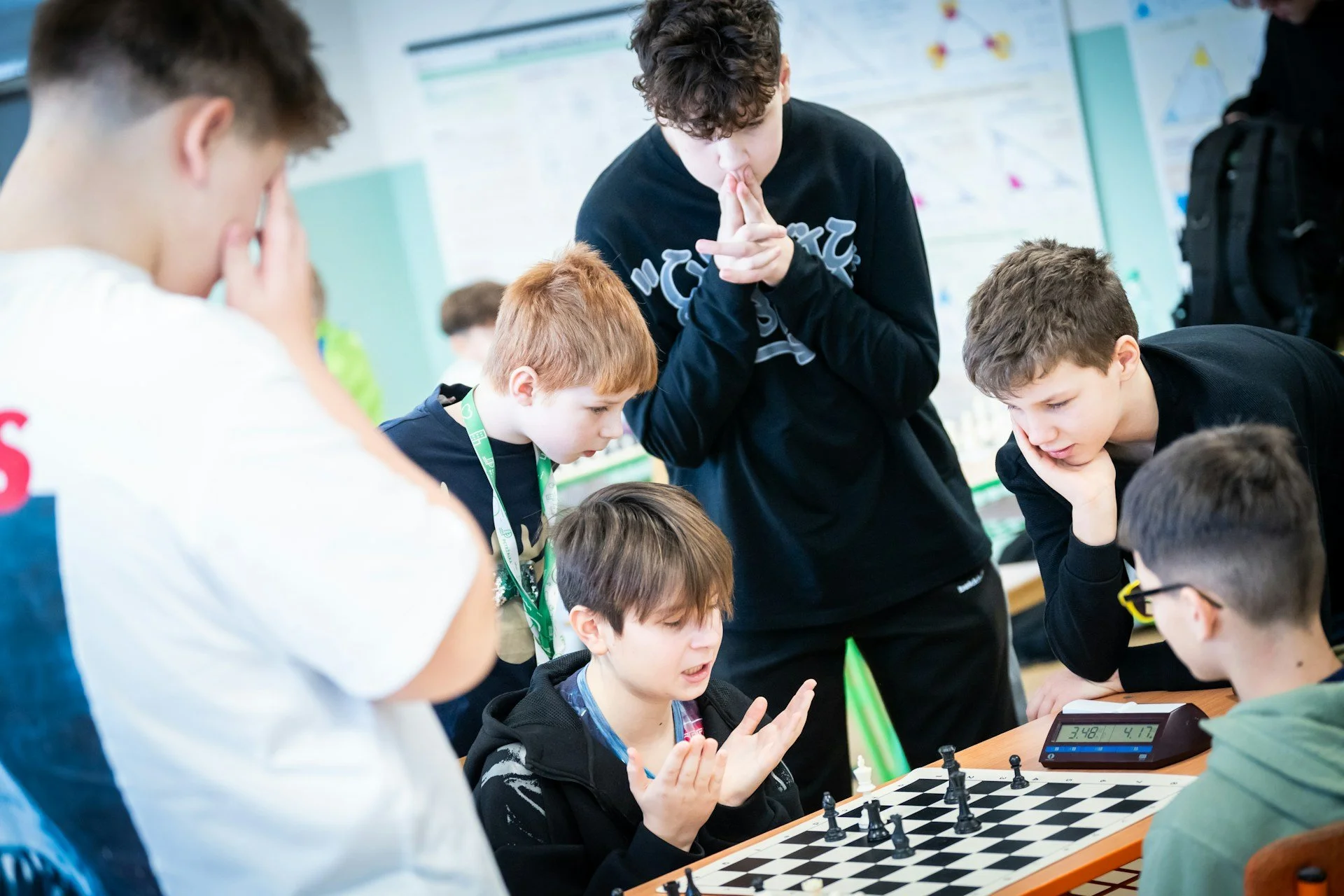
Tournament habits do not start at the board; they start in class. When families walk into our chess classes in Manhattan, they usually see the same scene: boards lined up in rows, students going over yesterday’s game with a coach, a group practicing with clocks, and someone talking about an upcoming weekend event. It looks relaxed, but every part of that time is building habits that students will carry into real tournaments.
We care about trophies, of course, but we care even more about what has to happen before a trophy is possible. Daily routines, good focus, and calm decision-making are what turn casual players into confident competitors. As spring tournaments, end-of-school-year events, and early summer championships approach, we are spending extra time in class and in our newsletters helping families understand how those habits grow week by week.
Tournament Mindset Starts Before the First Move
Tournament nerves do not start on move one. They start when a player walks into the playing hall. That is why our classes begin with warm-ups that feel a little like the start of a real round.
You will often see students doing things like:
Tactic sprints, solving a small set of puzzles against the clock
Short visualization drills, where they have to picture a position without moving the pieces
Quick strategy quizzes, where they choose a plan and explain it out loud
These are not just for skill. They train the brain to snap into “game mode” on demand. To keep these skills sharp at home, many of our students use Chess.com’s tactical trainers to maintain their calculation speed between weekly sessions. When students are used to this in class, they are much less shocked by the quiet, focused energy of a tournament hall at Hunter, a local Manhattan scholastic event, or any regional championship.
We also talk openly about emotional habits. Players learn that:
It is normal to feel nervous before round one
A loss is not the end of the day; it is a chance to learn something concrete
Being ahead is its own kind of pressure, and they must slow down and not rush to “finish” the game
Alongside that, we teach tiny but powerful routines that make tournament days smoother:
Arriving early, so there is time to find the room and settle in
Checking pairings calmly, without crowding or panic
Setting up the board and scoresheet before the round starts
Taking three deep breaths before playing the first move
When these routines are practiced in class, students walk into a real event already knowing what to do with their body and their mind.
Training Like a Tournament Player in Weekly Classes
A big difference between casual play and tournaments is the clock. In our Manhattan classes, clocks are not a special treat; they are part of normal training. We want students to be comfortable with common scholastic time controls they will see in local events, like G/25 or G/30 with a small delay.
In class, we run “tournament-style” practice rounds where we ask students to follow the official US Chess Federation rules of play, including:
Practice games at realistic time controls, not blitz every day
Specific lessons on how to budget time, such as not spending 10 minutes on move three
Coaching on when to trust your intuition and when to slow down and calculate
We also run “tournament-style” practice rounds. During those games, we ask students to follow rules they will see at real events:
No talking during the game, except to call a director or coach
Touch-move, so every move is chosen with care
Complete notation, recording every move clearly
After each game, they review with a coach or partner. This builds a habit many players skip: looking back to see where the game actually changed. That review is where growth happens. Students begin to see patterns, like always rushing when they are winning, or always forgetting to develop one piece.
Current lesson plans are designed around making tournament days feel familiar. We focus on:
Simple, reliable openings so students feel at home in the first 10 moves
Basic endgame technique, so they know what to do in common king and pawn endings
Consistent notation, so scoresheets are clean and easy to review later
Families who want more structured practice can also mix in our in-person lessons in Manhattan with flexible online lessons, so the same habits are reinforced during the week.
Habits Families Can Reinforce at Home Between Rounds
Tournament habits do not only live in the classroom. When home routines match what we do in class, students improve faster and feel more confident at events around the city.
Here are simple things families can do that line up with what we are teaching:
Pack a “tournament bag” the night before, including a scoresheet book, pencils, a water bottle, a snack, and maybe a small notebook
Practice one or two main openings instead of ten different ones
Do a short daily tactic set, even 10 minutes, to keep calculation sharp
How parents talk about tournaments also matters. We encourage questions like:
“What was one smart decision you made in that game?”
“What surprised you in your opponent’s play?”
“If you could replay one move, which would it be, and why?”
These questions match how our coaches talk in class. They keep the focus on learning, not just on “Did you win?” or “What is your rating now?”
We often send homework through our newsletters, such as annotating one game per week or following a simple pre-round checklist. Families who look at that with their child, even for a few minutes, help connect home and class. That way, when a student sits down at a board in a Manhattan school tournament or a regional event, the routine already feels like their own.
Using Upcoming Events as Learning Milestones
We treat every tournament as a checkpoint, not a final exam. Local scholastic events, city championships, Hunter tournaments, and other Manhattan competitions all become chances to test class habits.
Before each event on our calendar, coaches help students set clear, behavior-based goals, such as:
Record every move, even in time pressure
Use at least half of their clock time instead of blitzing out moves
Check for simple blunders before every move, especially loose pieces and back rank tricks
Rating goals can be motivating, but they are not fully in a player’s control. Habits are. When students focus on habits, good results tend to follow more naturally.
After the event, the real work starts. Students bring their scoresheets back into class, and we go through the games together. We review:
Opening choices that did not fit their style
Middlegame positions where they lost the thread
Endgames where a simple technique would have saved or won the game
From there, we build targeted plans: a few new opening ideas, a handful of key endgame positions, or a pattern of tactics to study. Families who want more support sometimes add a block of extra lessons around big tournaments, so we can go even deeper on specific games.
Turn Today’s Class Habits Into Tomorrow’s Tournament Wins
Tournament success looks shiny on the outside, but it rests on quiet, repeatable habits that grow in weekly chess classes in Manhattan and at home. When students learn how to warm up, focus, use their time, record their moves, shake off a loss, and honestly review their games, trophies become a side effect of steady progress.
For families already training with us, this is a great time to lean into that preparation cycle. Ask which one or two habits your child should focus on before the next event, and then support that same focus at home. For new families thinking about getting started, choosing one upcoming tournament as a family goal can give class time a clear purpose and make every small habit feel meaningful.
Help Your Child Build Confidence And Strategic Thinking Through Chess
If you are ready to give your child a structured path to improvement, our chess classes in Manhattan provide personalized instruction tailored to their level and goals. At United States Chess Academy, we focus on building strong fundamentals, practical game skills, and real confidence at the board. We welcome beginners and experienced players alike, and we will match your child with the right group or coach. Have questions about scheduling or placement? Simply contact us and we will help you get started.