Parent-Friendly At-Home Plan: Better Move Choices Through Puzzle Practice
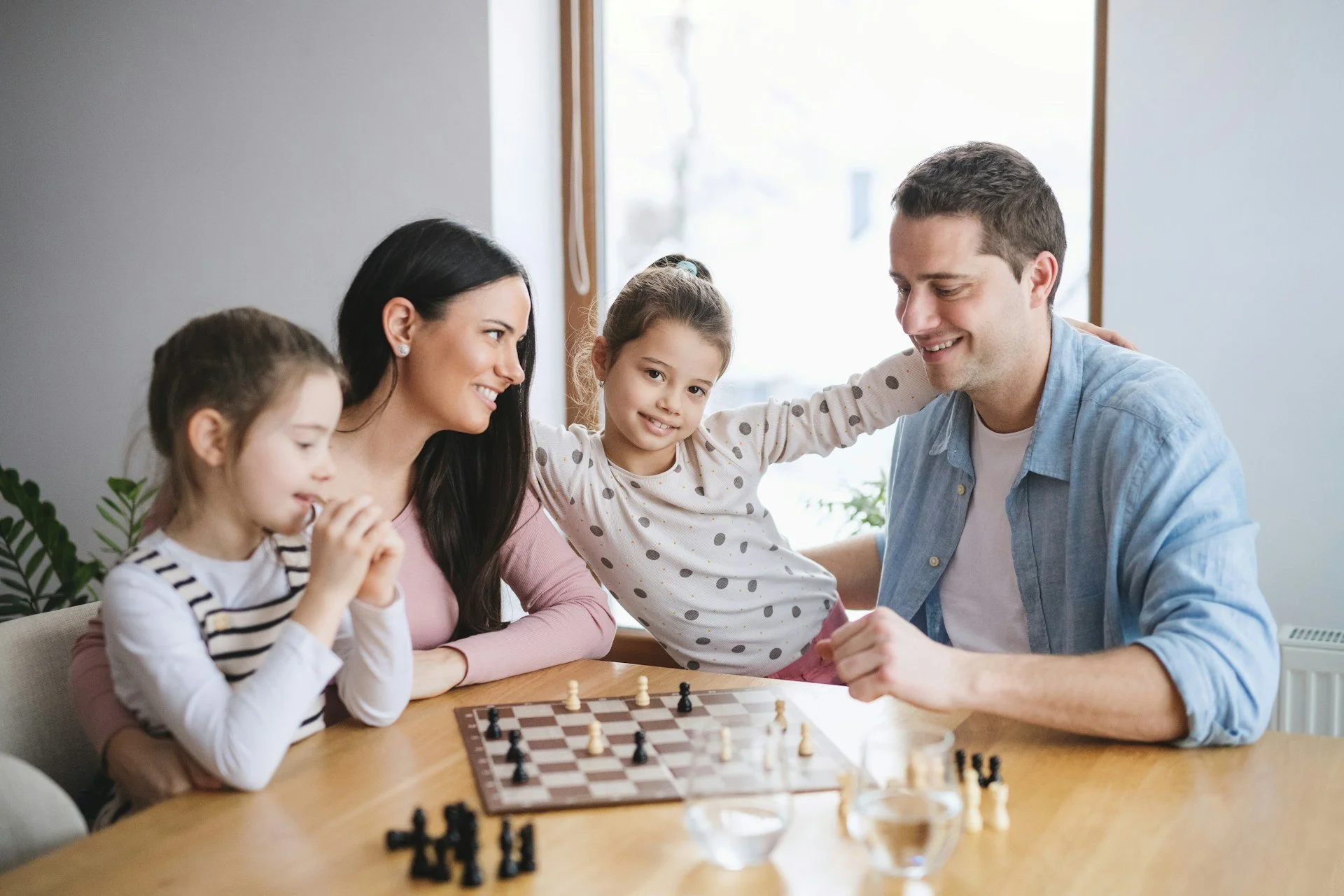
A Parent-Friendly at-Home Plan for Better Move Choices
Many kids can crush puzzle streaks on a phone, but then hang a queen in a real game. If that sounds familiar, you are not alone. The problem is not that your child needs yet another app or more screen time. The problem is that puzzle habits at home often do not match the thinking habits needed at the board.
At United States Chess Academy, we help families study chess in a way that actually shows up in real games. Here we will share a simple, 15 to 20 minute at-home plan that turns puzzle practice into calmer, smarter move choices without adding more screen time. You will see how to use a notebook, a real board, and a few simple questions so your child starts playing the way they “see” in puzzles.
Why Puzzle Grinders Still Blunder in Real Games
When kids do puzzles online, they know there is a trick on the board. Their brain switches into “find the win” mode. In real games, the board usually looks confusing. There is no promise that a winning move even exists. So they rush, guess, and miss simple threats.
Timed puzzle streaks and ratings can also train the wrong habits, like:
Moving fast just to keep a streak going
Making random tries because “one of these must work”
Relying on hints and auto-correct instead of checking carefully
Those habits do not match what strong players do when they study chess. Serious players slow down, check what the opponent wants, and think through a small list of candidate moves. The big idea for parents is this: you do not have to be a chess expert to guide that kind of thinking. You just need a simple routine that makes your child connect puzzle patterns to real move choices, like:
Slowing down for one honest look at the position
Checking basic safety before every move
Asking “what will my opponent do next?”
When puzzle time builds these habits, blunders start to drop in tournament and club games, whether your child plays locally or travels to larger events like those in Manhattan or Hunter College events.
A Simple at-Home Routine That Fits Family Life
You do not need hours each day to study chess. You just need a small routine you can keep up 3 to 5 days a week. Here is a simple 15 to 20 minute plan that works well for many families:
1. Warm-up, 3 minutes
Set up a small puzzle or an easy checkmate on a real board. Ask your child to solve it without rushing. This signals “chess thinking time” and helps them shift out of screen mode.
2. Focused puzzle segment, 10 to 12 minutes
Use printed puzzles or puzzles copied into a notebook. Aim for about 5 to 10 puzzles, depending on difficulty. No timer, no rating, no streak. The goal is calm problem solving, not speed.
3. Quick reflection, 3 to 5 minutes
For 1 or 2 puzzles, ask your child to write a short “thought process line” in a notebook. One or two sentences is enough. Then talk for a minute about what they saw and how they chose their move.
Good times to fit this into a busy spring schedule might be:
Right after homework, before TV or games
A short “wind-down” before bed
Weekend mornings before sports or other activities
Consistency matters more than volume. Ten puzzles done with care, talk, and writing will help more than fifty puzzles rushed on an app. This is close to how strong players and coaches at places like our online lessons and in-person lessons approach study time: slow, focused, and repeatable.
Turning Every Puzzle Into a Real-Game Habit
The magic is not in the puzzle itself. The magic is in how your child thinks while solving it. You can guide this with a few simple questions, even if you do not know the best move.
For each puzzle, try asking some or all of these:
What is my opponent’s threat?
What are all my checks and captures?
Is my move safe? What are they attacking after my move?
What if they do not play the obvious reply?
These questions copy the thinking patterns that stronger players use when they study chess. They train your child to stop, scan the board, and think about the opponent, not just their own idea.
Next, use a “thought process line” in a notebook. For one or two puzzles each session, have your child write something like:
“I saw their queen attacking my knight, then I checked all checks and found Qh7 mate.”
“My first idea was to take the pawn, but then I saw my back rank was weak.”
This trains slow, structured thinking, which carries straight into tournament games.
You can also keep a running list of puzzle themes on one page of the notebook:
Pins
Forks
Skewers
Back-rank mates
Discovered attacks
Every time a puzzle uses one of these, add a tally mark. Before or after events, like local scholastic tournaments or a big city open, encourage your child to “hunt” for these patterns in their own games. This turns pattern spotting from a puzzle trick into a board habit.
Low-Tech Tools That Beat More Screen Time
Many parents worry about screen time, especially when kids already have computers for school and phones for friends. Good news: strong chess study does not have to be digital-heavy. Simple, low-tech tools often work better for focus and memory.
Your at-home chess study kit can be as basic as:
A real chessboard and pieces
Printed puzzle sheets or a puzzle book
An inexpensive composition notebook
A pencil and highlighter
Research on media and child development, like The Children and Screens Guide for Child Development and Media Use, supports the idea that kids benefit from screen breaks and hands-on learning. A physical board helps them see the whole position, not just a zoomed-in corner of a phone screen.
Try this low-tech exercise once or twice a week:
Pick one favorite puzzle from the week.
Cover the solution.
Ask your child to set it up from memory on the real board.
Have them explain how the tactic works, step by step.
You can also make study chess social and fun with a simple family puzzle night. Put one diagram on the table and solve it together. Let your child be the “coach” and explain why some moves fail. This builds confidence and deepens understanding much more than silent scrolling.
Guiding Your Child Like a Coach (Even If You Are a Beginner)
You do not need to know openings, long endgames, or fancy names to guide good thinking. What your child needs from you is calm, steady questions and praise for their process, not just their result.
Here are some script-style prompts you can use:
“Show me all the checks you considered.”
“What was your first idea, and did you check if it was safe?”
“What move do you think your opponent wants to play next?”
“If your move is wrong, what mistake do you think you made in your thinking?”
When your child solves a hard puzzle, instead of saying only “You got it right,” try:
“I like how you took your time and checked different moves.”
“You wrote down your idea before moving, that is how tournament players think.”
This builds resilience. In real games, not every move will work, but strong thinkers keep using the same calm process.
You can also help with difficulty level. If puzzles feel too easy, your child will race and stop thinking. If they are too hard, your child will guess or feel stuck. Look for signs like:
Too easy: solved in a few seconds, no writing, no pause to check safety
Too hard: lots of frustration, random moves, giving up quickly
Adjust by picking a slightly simpler puzzle set or by doing fewer but deeper puzzles. You do not need new apps to do this. Just tweak what you use now, or ask a coach at our academy to suggest puzzle levels during class planning or program setup.
Make Spring Practice Count All Year Long
A small, steady routine can turn casual puzzle grinding into stronger real-game decisions. The core pieces are simple: short daily sessions, a notebook system for thought process lines and pattern lists, and a few parent questions that push your child to slow down and think like a tournament player.
Try this plan for about four weeks and watch for changes in your child’s patience, focus, and confidence at the board. Many families see better time management, fewer one-move blunders, and more “I saw that tactic coming” moments in club games and local events. With a little structure at home and the support of experienced coaches at the United States Chess Academy here in the United States, puzzle practice can finally match the way your child wants to play in real chess battles.
Take The Next Step To Level Up Your Chess Skills
Ready to turn what you have learned here into real improvement on the board? At United States Chess Academy, we offer personalized lessons that help you study chess with structure, feedback, and a clear path to your goals. Whether you are a newer player or already tournament-strong, we tailor each session to your current level and ambitions. Have questions about programs or scheduling, or need help choosing the right option for you? Just contact us and we will guide you through your next move.