How Math Chess Turns Strategy Into School Success
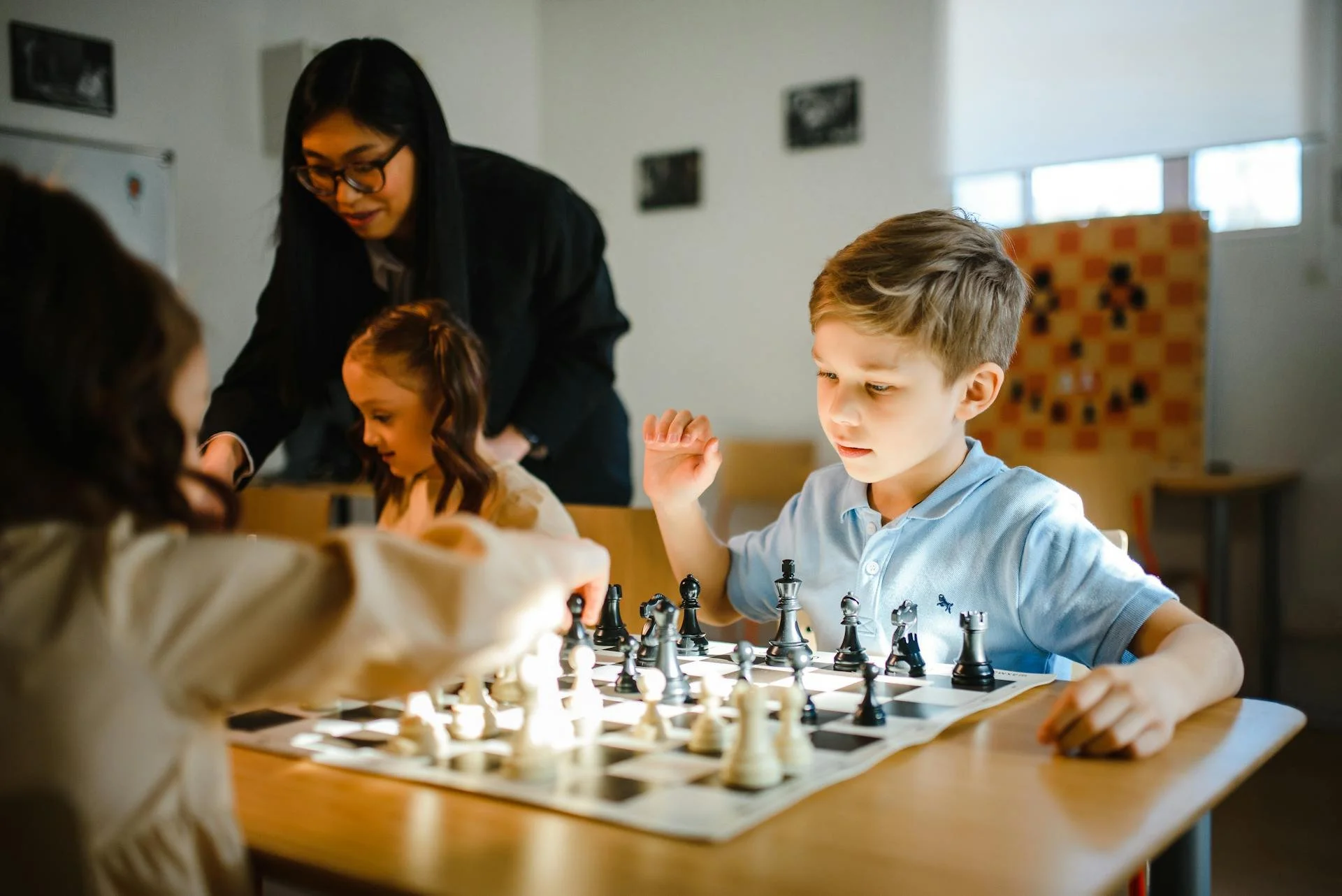
Chess is not just about winning a game; it is about training the brain to think in clear, repeatable ways. When kids practice what we call math chess, they are actually exercising many of the same skills they need for math class and other subjects in school.
As spring gets busy with end-of-year tests and a full tournament calendar at United States Chess Academy, many families are asking how all this calculation and strategy work connects to classroom success. In this article, we will walk through how our lessons, drills, and events are set up to support real academic growth, not only better chess results. You will see how the same habits that help students find a checkmate also help them finish word problems, show their work, and stay calm during tests.
In our math-focused classes, families see students doing things like calculation drills, evaluation exercises, and endgame puzzles. These are not random activities. Each one is built to grow skills that matter in school, such as:
Careful step-by-step thinking
Accurate mental math
Patience and focus when tasks feel hard
When students train these habits in chess, they bring them right back into the classroom without even trying.
From Pieces to Patterns: Where Chess Meets Mathematics
The chessboard is a quiet math lab. Every square sits on a grid. Every piece has a value. Every move has to be counted and compared. Even new players quickly get used to thinking in numbers and patterns.
Some of the natural math connections in chess include:
Coordinates on the board, which act like a simple grid system
Piece values, which encourage basic arithmetic and comparing totals
Counting attackers and defenders, which builds number sense
Our coaches do not stop at casual play. In our classes, we turn regular games into math chess training. Instead of just asking, "What move do you want to play?" we ask things like:
"How many moves until your pawn reaches the other side?"
"If you trade a rook for a bishop and a pawn, who is up in material?"
"Can you calculate two or three moves ahead and tell me what the position will look like?"
This kind of guided thinking feels like a fun game, but it works a lot like multi-step word problems in math. Students must understand the situation, choose a plan, and follow the steps in order.
Right now in our spring curriculum, our classes are full of pattern-recognition exercises. We work on:
Tactical motifs, such as forks, pins, and skewers
Mating nets, where students spot repeated shapes around the king
Pawn structures that repeat across many openings
These pattern skills are the same ones students use when they look for shapes in geometry, or when they notice how numbers repeat in algebra problems. The more patterns they can spot on the board, the better they get at spotting patterns on worksheets too.
Building Calculation Muscles for Tests and Tournaments
Calculation is one of the core skills in math chess. We want students to see a position, hold it in their mind, and explore different lines before they touch a piece. That is very similar to solving a math problem in their head before writing the answer.
In our current training, students are practicing:
Timed tactics sets, to build speed and accuracy
Visualizing positions without moving the pieces, to stretch their working memory
Checking each line carefully, to build the habit of verifying their answers
This kind of mental work connects directly to classroom math. When students do regular calculation training, they are also strengthening:
Working memory, used for holding numbers while they move through steps
Focus, used for staying with a hard problem instead of giving up
Accuracy, used for catching small mistakes before turning in work
As we move through spring, we increase calculation practice on purpose. Many students are getting ready for both chess tournaments and end-of-year assessments. When they have spent weeks timing themselves on puzzles and checking their lines, they walk into math exams with more confidence. They already know how it feels to think under a little pressure and still stay calm.
Strategic Thinking That Transfers to the Classroom
Chess is not only tactics. It is also about long-term plans. Players choose openings, set middlegame goals, and think about how to reach the endgame they want. This is very close to how we want students to approach math problems.
In both chess and math, good problem solvers learn to:
Identify the problem clearly
Choose a strategy that fits the situation
Check their work to see if the answer makes sense
In our group lessons, we use a lot of "think aloud" modeling. A coach will talk through a position step by step: what they notice, what they are worried about, which moves they are comparing, and how they check their final choice. Students are not only hearing what move is strong, they are learning a repeatable process.
Families often start to notice changes at home. After steady math chess training, many students:
Take extra time to check their math work
Organize homework steps more clearly from start to finish
Use if-then thinking to plan science projects or multi-step assignments
These are the same strategic habits we talk about at the board. Over time, chess becomes a simple, concrete way for students to practice planning ahead and taking ownership of their choices.
Practice Routines That Bring Tournament Prep Home
Good habits between classes make a big difference, both for tournaments and schoolwork. This spring, we are encouraging families to set up short, regular at-home routines that match what we do in class.
Some of the routines we recommend include:
Daily puzzle sets, even just a few positions at a time
Five-minute review games, focusing on one theme like development or king safety
Post-game analysis worksheets, where students write or draw what happened
These routines pull double duty. For example:
Puzzles build focus and the ability to stick with a small problem until it is solved
Annotated games ask students to explain their reasoning, which strengthens writing and communication
Looking at time trouble in games mirrors how they learn to manage time on tests
Our online platforms and class homework, such as weekly puzzle packs and game review assignments, are designed to line up with the kinds of thinking students do in math class. That way, practice feels connected instead of like one more unrelated task on the to-do list.
Join the Math Chess Momentum This Spring
Right now is a great time to plug into math chess work that already matches what many students are doing in school. At United States Chess Academy, our math-focused classes, seasonal camps, and tournament prep programs are all built around calculation, strategy, and clear thinking that support both chess growth and classroom success.
Families can watch for little changes at home. You might notice your child calculating faster when you play a quick game, explaining their choices more clearly, or showing more patience with homework. Those are all signs that the skills from math chess are starting to stick, on and off the board.
Help Your Child Turn Chess Skills Into Stronger Math Confidence
Give your child a learning edge by enrolling in our math chess lessons that build strategic thinking and problem-solving skills they can use in the classroom and beyond. At United States Chess Academy, we design each session to connect chess patterns with real math concepts so students see how logic pays off in real time. If you have questions about levels, scheduling, or placement, simply contact us and we will help you choose the right path for your child.